

Peak season for international freight forwarders in the Philippines is not limited to one month. Instead, it comes in recurring spikes that reduce vessels’ full capacity, raise freight rates, and put pressure on customs at ports.
International trade has five peak periods that cargo shippers should watch for. When applied to Philippine trade lanes, these are the months when procurement, warehousing, and transport plans need extra attention.
This blog explains why partnering with a reliable international freight forwarding company allows you to reduce your operational costs, helps you secure a warehouse space, and lets you speed up your customs clearance to get your cargo delivered on time.
Summary – Key Takeaways
- Plan Ahead: Philippines’ peak periods are aligned with holidays, school calendars, and cultural events.
- Expect Higher Costs: Peak Season Surcharges (PSS) and rate spikes are common in air and sea freight.
- Capacity Management is Important: Limited vessel or airlift space can lead to blank sailings and longer lead times.
- Local and Global Trends Differ: Comparing local peak periods with international shipping trends helps optimize supply chain operations
What “peak season” means for international freight forwarders
International freight forwarders face a unique set of challenges during peak season. These challenges usually revolve around three main factors: costs, capacity, and risks.
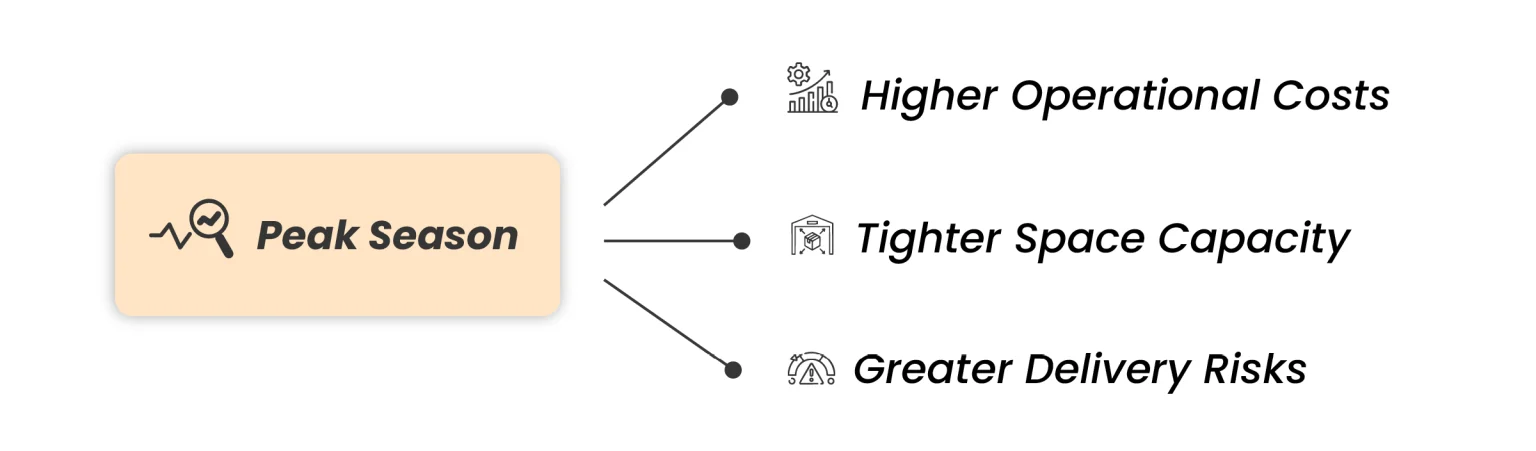
The triple impact of peak season in cargo shipping: Cost, Capacity, Risk
Why Freight Demand Spikes in the Philippines
Cargo shipping demand in the Philippines surges during peak season because of cultural events, seasonal business cycles, and consumer behavior tied to holidays and standard academic calendars.
These peak months usually come with a spike in customer orders, rushed inventory movement, and pressure on the supply chain, which often require faster and expedited deliveries.
Key Factors Behind the Philippines’ Cargo Shipping Surge Months
The demand for cargo shipping during peak season reflects different timeframes and triggers. Always remember that freight volume doesn’t increase out of sheer luck because each surge has its own explanation based on consumer needs in the market.
To have a clear understanding, explore the common reasons behind the rise in shipping demand in the Philippines.
1. Holiday or ‘BER Season (September to December)
Filipinos’ strong gift-giving culture drives a surge in package deliveries starting in the ‘BER months.
This leads to demand for courier and freight forwarding services from both businesses and individuals.
2. Chinese New Year (Late January to Early February)
Wholesale deliveries surge ahead of the Chinese New Year, particularly from commercial hubs like Binondo, as many Chinese-owned businesses close temporarily for the festivities. This creates a pre-holiday shipping rush to meet demand before the holiday.
3. Summer Season (March to May)
During warmer months in the Philippines, businesses tend to ramp up production through summer sales and their own marketing strategies to boost sales. This often leads to increased nationwide freight shipments.
4. Back-to-School (June to August)
Retailers stock up on school supplies as the academic year approaches. This is driven by high demand for quick deliveries from parents, teachers, and students.
Ready to Ship Worldwide?
Whether you’re transporting raw materials, perishables, or finished goods, Logicore Express delivers full‑service international freight forwarding.
Local vs. Global Freight Peak Seasons: What’s the Difference?
By comparing local Philippine shipping peak periods with global trends, you can make informed decisions, plan shipments better, avoid delays, and overcome supply chain challenges.
The table below shows key seasonal surges and factors for both markets.
| PEAK PERIOD | LOCAL | INTERNATIONAL | CONSIDERATIONS |
|---|---|---|---|
| Chinese New Year | Late Jan – Early Feb | January 28 to February 4 |
|
| Summer Season | Mar – May | Jul – Aug |
|
| Holiday Season | Sep – Dec | Sep – Dec (Black Friday) |
|
How peak season impacts capacity, rates, and lead time

1. Space Constraints due to Poor Capacity Planning Strategies
Vessels for sea freight and airlift for air freight get full earlier to the point that carriers have to deploy “blank sailings” or reallocate capacity across lanes.
Blank Sailings
A vessel voyage cancellation or skipped port call happens to manage capacity and cut costs, often due to low demand, port congestion, or operational issues.
In addition to this, the global container volumes reached over 126.75 million twenty-foot equivalent units (TEU) in the first months of 2025, marking a 4.4% increase from the same period last year. This is according to the recent data from Container Trades Statistics

2. Rate Volatility and Surcharges
Carriers and integrators apply Peak Season Surcharges (PSS) or extra fees, causing short-term spikes in air and ocean freight rates. Eventually, resource allocation becomes a necessity to adapt.
“Tariff uncertainty is paralyzing decision-making for many importers, especially small and mid-sized brands that can’t easily absorb a 25–40% duty hike.”– Robert Khachatryan, CEO, Freight Right

3. Port and Custom Friction
The Philippines’ National Time Release Study (NTRS), developed by the World Customs Organization (WCO), intends to measure and reduce clearance times.
“With the transformation of our trade environment comes the imperative not only to move goods faster but also to build a system that is smarter, more transparent, and more responsive.”–Michael C. Fermin, Deputy Commissioner, Bureau of Customs – Internal Administration Group
Still, real-world improvements take months and require pre-clearance workflows to be effective. So, expect longer lead times during peak surges unless you pre-lodge paperwork and secure booking confirmations.
Why Choose an International Freight Forwarding Company in the Philippines
Partnering with an international freight forwarder based in Manila reduces friction and creates leverage during peak season. Logicore Express (LGEx) offers capabilities typical of a peak-ready forwarder:
Global carrier relationships and pooled capacity
Logicore Express’ diverse cargo shipping services help you secure rolling space and avoid last-minute spot exposure.
Reliable end-to-end freight services
At Logicore Express, we leverage different transport options (via air, sea, or land) to ensure that your cargo shipping requirements are met with satisfaction.
Customs clearance expert
Here at Logicore Express, we take care of everything. From flexible transportation options and complete customs documentations, to real-time cargo updates.
Conclusion
Peak season for international freight in the Philippines brings unique challenges for businesses, including limited capacity, rising rates, and longer lead times. But by understanding local and global peak periods, you can plan shipments more effectively, reduce operational risks, and avoid costly delays.
Partnering with a reliable international freight forwarder like Logicore Express ensures smooth cargo movement, expert customs clearance, and flexible transport options during high-demand periods. Because with the right forwarder, your business can stay ahead of seasonal surges and maintain a competitive edge in the market.
Ship with the Best Philippine Freight Forwarding Partner
Ensure your goods reach their destination safely and on time with the Philippines’ trusted freight forwarder.

Securing warehouse space during peak seasons sounds particularly challenging—it’s good to know a freight forwarder can help with that.